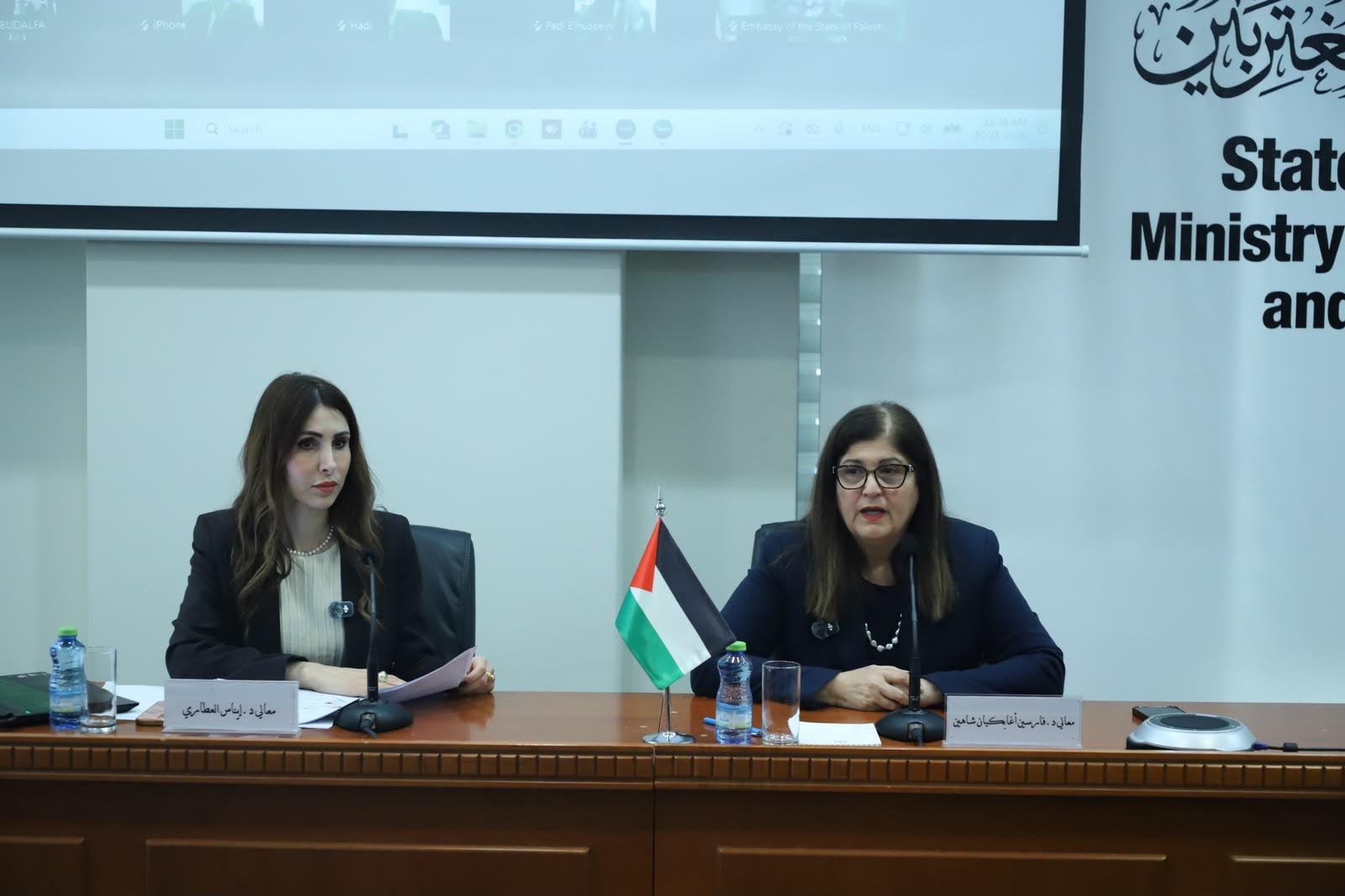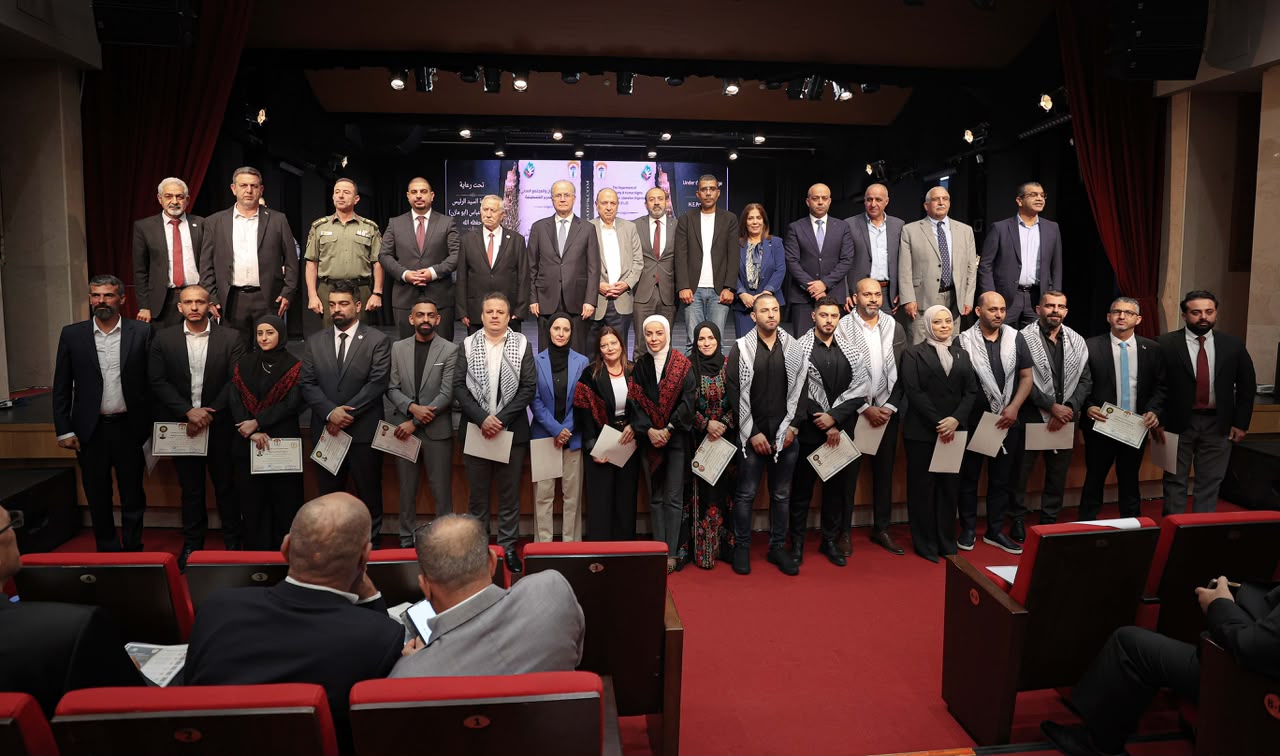
RAMALLAH, July 29, 2026 (WAFA) – The Palestine Liberation Organization's (PLO) Human Rights and Civil Society Department on Wednesday launched the Palestinian National Observatory for Documenting Israeli Violations of International Law, International Humanitarian Law, and Human Rights.
The launch ceremony was attended by Prime Minister Mohammad Mustafa, members of the PLO Executive Committee and Fatah Central Committee, ministers, security officials, ambassadors, representatives of diplomatic missions, and delegates from Palestinian human rights and national institutions.
Representing President Mahmoud Abbas, Prime Minister Mustafa stressed the importance of developing national mechanisms capable of preserving the truth, strengthening legal and institutional efforts, and reinforcing Palestine's role in defending human rights and international law.
He congratulated the PLO's Human Rights and Civil Society Department, partner institutions, and all those who contributed to establishing the observatory, including Palestinian professionals who completed specialized training programs in monitoring and documentation.
Mustafa said the recent attacks on the occupied West Bank villages and towns of Tell, Beit Furik, Al-Mughayyir, and Deir Dibwan, the ongoing attacks on Palestinian communities in Masafer Yatta, repeated incursions into Al-Aqsa Mosque, and the continuing Israeli aggression against the Gaza Strip are not isolated incidents but part of an escalating and systematic pattern targeting the Palestinian people, their land, holy sites, and national existence.
He added that colonist violence is no longer limited to isolated acts but has become part of a broader policy that provides protection, entrenches impunity, seeks to impose new realities on the ground, and undermines the establishment of an independent Palestinian state. He warned that the continued commission of such crimes risks making them a familiar occurrence that no longer moves the world's conscience.
Mustafa emphasized that the national responsibility requires documenting violations in a professional and systematic manner, transforming facts into credible legal evidence to expose crimes, counter denial and disinformation, and compel the international community to uphold its legal, moral, and political responsibilities.
"We are not seeking special treatment or privileges," he said. "We are demanding the application of international law to everyone without selectivity or double standards. The rule of law begins with acknowledging the facts."
PLO Executive Committee member and Head of the Human Rights and Civil Society Department Ahmad Al-Tamimi said the observatory aims to document Israeli violations while safeguarding evidence and preserving the Palestinian national memory through the establishment of an independent and professional national system for monitoring violations, verifying information, and securely and reliably preserving testimonies and documentation.
He said the observatory will contribute to promoting justice, accountability, and an end to impunity by producing human rights reports, legal case files, studies, maps, and indicators, thereby supporting the prosecution of perpetrators of violations before international courts and judicial mechanisms, while establishing an independent and sustainable Palestinian reference.
Al-Tamimi said the observatory was established in response to the need for a modern national platform to collect, organize, analyze, and present information on violations committed against the Palestinian people in a professional manner, serving victims, researchers, journalists, and human rights organizations, while strengthening the dissemination of the documented Palestinian narrative at the local, regional, and international levels.
Al-Tamimi stressed the importance of establishing the observatory as a multidisciplinary national reference that integrates human rights, legal, research, and technical work, serving victims, institutions, policymakers, and protection and justice efforts.
Deputy Head of the Human Rights and Civil Society Department and General Supervisor of the Observatory Qassem Awwad said the observatory comprises a report and violations documentation system, a database for classifying and analyzing incidents, a reporting and analysis center, a geospatial mapping platform, and a legal reference framework based on international humanitarian law and international human rights law. It also includes a section dedicated to testimonies and field accounts, as well as a digital archive for documents and evidence, thereby strengthening the preservation of evidence and supporting the preparation of legal case files.
He said the daily attacks carried out by colonist groups in the occupied West Bank, along with the grave violations committed in the Gaza Strip, constitute patterns of criminal conduct that require an institutional legal response based on internationally recognized standards for the collection and preservation of evidence.
Al-Khatib said the observatory will serve as a key resource for the national team responsible for crimes falling within the jurisdiction of the International Criminal Court by supporting the collection and documentation of evidence and the preparation of legal case files that meet international standards of proof and accountability.
He stressed that achieving justice depends on the integrity of evidence and the accuracy of its documentation.
T.R.